


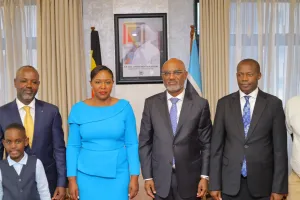


President Yoweri Museveni has pledged Shs125 billion to the Uganda Medical Association (UMA) Savings and Credit Cooperative Organisation (SACCO) to help health workers access affordable loans, upgrade their professional skills and establish businesses. He made the commitment on Friday, during a meeting with medical interns and UMA leaders, led by association president Dr Frank Asiimwe, at State House Entebbe.
The proposed funding is intended to strengthen the financial capacity of the SACCO and enable medical professionals to obtain credit for further training, specialisation and income-generating activities. Museveni described the initiative as a practical way of empowering health workers and creating opportunities for self-employment.
The President also directed that the policy requiring medical students to complete their internship before graduating should be corrected, arguing that university graduation and housemanship are separate processes that should not be unnecessarily combined.
The directive is intended to address delays in the transition from medical education to supervised clinical training. However, implementation will depend on the relevant authorities reviewing the existing requirements and establishing clear procedures for academic graduation, internship and professional registration.
Medical internship provides newly qualified doctors with supervised practical experience in healthcare facilities. Any changes to the graduation process would therefore need to maintain the necessary professional training and licensing standards.
The welfare of medical interns was another major issue discussed during the meeting. President Museveni said consultations on their allowances would continue, stressing that government decisions must be guided by affordability and long-term financial sustainability.
Dr Asiimwe reportedly raised concerns about unpaid allowances, saying approximately 300 interns had not received their payments despite reporting for duty and providing services in healthcare facilities. The concerns highlight the importance of timely disbursement and clear communication between medical professionals and the responsible government agencies.
The proposed Shs125 billion SACCO funding is also expected to provide health workers with additional opportunities to finance professional development and business ventures. Medical professionals pursuing further qualifications through private institutions could potentially benefit from the credit arrangements, although the eligibility criteria, loan terms and implementation framework have yet to be clarified.
The association has also called for stronger public-private partnerships in medical training, deployment, professional advancement and healthcare quality control. UMA has emphasised the contribution of professionals working in both public and private healthcare facilities and the need for greater cooperation across the sector.
Museveni also expressed support for proposals to introduce tax relief for health workers and improve access to essential, life-supporting items used in healthcare delivery. The proposals are intended to ease financial pressures on medical professionals and support the provision of essential health services.
However, his support for the proposals does not mean that new tax exemptions or duty-free arrangements have already been implemented. Any changes would require further policy decisions and clarification from the relevant authorities.
Beyond allowances and access to credit, UMA has raised concerns about career progression, staffing levels and professional training. The association has reportedly proposed introducing three additional professional ranks for doctors: Chief Consultant, Principal Consultant and Senior Consultant, to create further opportunities for career advancement.
UMA has also advocated improvements in staffing at referral hospitals and the establishment of regional medical hubs to strengthen mentorship and practical training for young doctors. These proposals form part of broader efforts to improve working conditions, retain skilled professionals and strengthen healthcare delivery.
The association has further highlighted the need for accountability and better coordination between government and healthcare providers. Dr Asiimwe reportedly said UMA was working with the Ministry of Health to address absenteeism among health workers.
The proposals discussed at State House Entebbe cover several interconnected issues, including access to affordable financing, professional development, internship arrangements, remuneration and tax policy. Their implementation will depend on the decisions and actions of the relevant government agencies and healthcare stakeholders.
Museveni said the overall objective was to build a strong health sector with skilled, motivated and empowered professionals capable of delivering quality healthcare to all Ugandans. The next steps will be important in determining how the funding pledge and proposed policy changes translate into practical improvements for medical workers and the country's healthcare system.







Sunrise reporter
Leave a Comment
Your email address will not be published.