
Uganda and the European Union are set to deepen their trade and investment partnership as both sides seek to attract more investment, expand exports, create jobs and support private-sector growth.
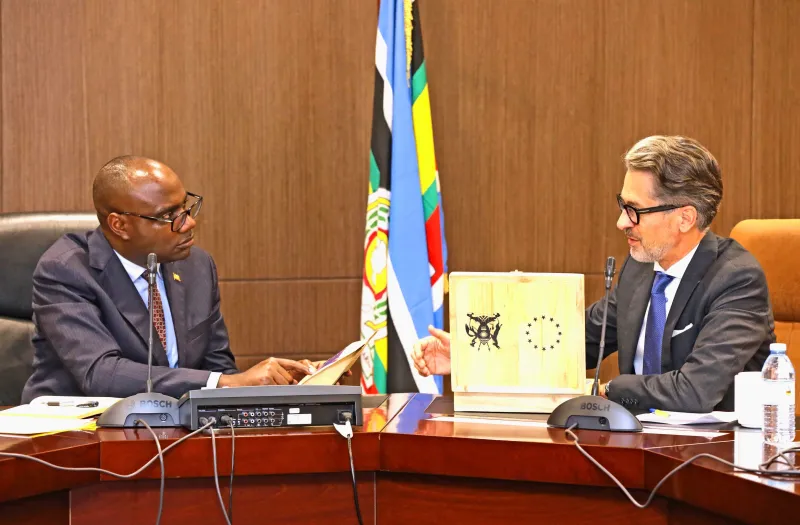
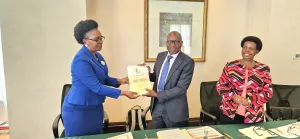
Finance Minister Henry Musasizi reaffirmed Uganda’s commitment to strengthening cooperation with the EU during a meeting with an EU delegation led by the bloc’s Ambassador to Uganda, H.E. Jan Sadek.
Musasizi said Uganda values its longstanding relationship with the European Union and wants the partnership to deliver tangible economic benefits, including increased investment, employment opportunities, exports and sustainable economic growth.
The engagement comes as Uganda and the EU mark 50 years of partnership, with cooperation increasingly expanding beyond traditional development assistance to areas such as trade, infrastructure, energy, climate finance, investment and private-sector development.
Sadek said the European Union remains committed to working closely with Uganda’s Ministry of Finance, which he described as the EU’s primary counterpart for development cooperation.
According to the Ambassador, the EU-Uganda bilateral development cooperation envelope for 2021–2027 amounts to €539 million, while Team Europe provides more than €750 million annually in development assistance to Uganda.
The cooperation is focused on sustainable and inclusive growth and jobs, governance and social inclusion, as well as connectivity, in line with the EU’s Global Gateway strategy.
Sadek said the relationship is also evolving towards a broader financing model involving grants, loans, guarantees and blended finance aimed at mobilising greater private-sector investment.
Under the Global Gateway initiative, Team Europe is investing about €1.4 billion in Uganda’s private-sector development. About €300 million in grant funding is targeted at improving access to finance, skills development, the business environment and productive infrastructure.
The EU portfolio also covers sectors and value chains considered important to Uganda’s long-term economic growth, including coffee, forestry, tourism and critical raw materials.
Additional investments are being directed towards energy, transport and digital connectivity.
“Our portfolio is broad and designed to deliver practical results while supporting Uganda’s own priorities,” Sadek said.
Energy was among the key areas discussed, with the rehabilitation of the Nalubaale and Kiira hydropower plants highlighted as one of Team Europe’s flagship initiatives in Uganda.
The rehabilitation project has a €170 million financing package, comprising €30 million in EU grant funding alongside concessional loans from the European Investment Bank and the French Development Agency.
The project is expected to extend the operational life of the two strategic renewable energy assets by at least another 30 years.
“The rehabilitation of the Nalubaale and Kiira hydropower plants is one of our flagship Team Europe initiatives in Uganda,” Sadek said.
The discussions also covered climate finance, including Uganda’s preparations to issue its first sovereign green bond.
The EU expressed interest in supporting Uganda’s readiness for the planned issuance and exploring ways the bond could help mobilise international private capital for sustainable investments.
The proposed green bond forms part of broader efforts to expand financing for climate-related and environmentally sustainable projects.
Trade was another major focus of the meeting.
Sadek said Uganda’s exports to the European Union increased from €377 million in 2015 to €1.8 billion in 2025.
Uganda recorded a trade surplus of approximately €950 million with the EU in 2025, highlighting the growing importance of the European market to Uganda’s export sector.
The latest discussions are expected to further strengthen economic ties between Uganda and the EU as both sides seek to expand investment, trade and financing opportunities while supporting Uganda’s broader economic transformation agenda.


Sunrise reporter
Leave a Comment
Your email address will not be published.