
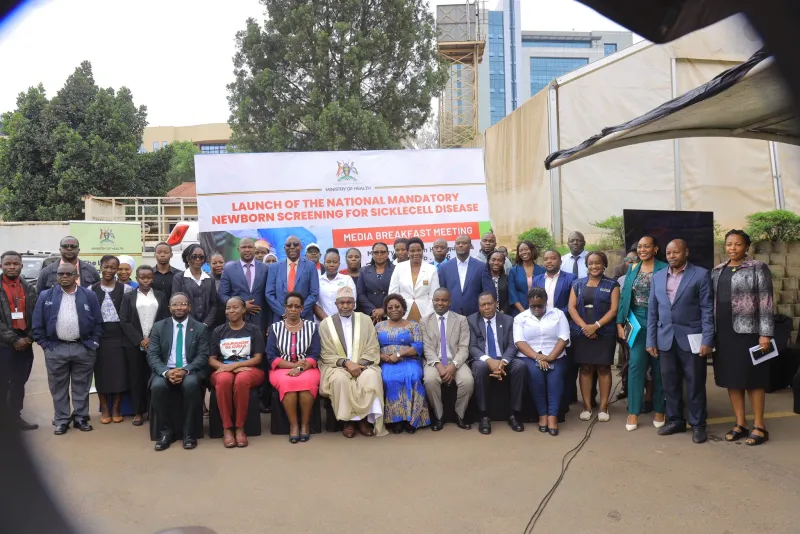





Uganda’s Ministry of Health has officially rolled out mandatory screening of all newborn babies for sickle cell disease across government health facilities, in a major health intervention aimed at tackling the country’s high child mortality burden.
This is an evidence based intervention aimed at prevention and control of sickle cell disease. It enables early identification of affected infants before symptoms develop, allowing for life saving interventions.
Medical experts have welcomed the move, describing it as a bold and timely step, noting that sickle cell disease remains one of the most overlooked contributors to deaths among children under five in Uganda.
Speaking shortly after the launch of the nationwide screening programme on Monday, Child Health Specialist Dr. Deogratias Munube said evidence from Mulago National Referral Hospital indicates that many children suffering from sickle cell disease are often misdiagnosed. He revealed that studies conducted at Mulago found that nearly one in four babies brought in with fever and malaria symptoms were later discovered to have undiagnosed sickle cell disease.
Dr. Munube explained that although Uganda has made progress in fighting major childhood illnesses such as malaria, pneumonia and diarrheal diseases, infant mortality rates have not reduced as expected because sickle cell interventions were not reaching children early enough.
He said the new mandatory screening system will allow health workers to identify affected babies immediately after birth and begin early medical care before complications become severe. This includes providing treatments such as penicillin to prevent infections, malaria prevention medication, and continuous follow-up care.
According to Munube, early diagnosis will also improve patient tracking, reduce repeated hospital admissions and increase the chances of children surviving into adulthood.
Permanent Secretary in the Ministry of Health, Dr. Diana Atwine, said the screening will be conducted using Rapid Diagnostic Tests (RDTs) in government-run health facilities before mothers are discharged after delivery.
Atwine noted that an estimated 20,000 babies are born with sickle cell disease in Uganda every year, and about 80 percent of them die before reaching five years of age. However, she explained that the statistics currently available are based on testing done in only a few health facilities, meaning the actual number of cases could be higher.
She added that the ministry has expanded sickle cell treatment services beyond national and regional referral hospitals to other health facilities to ensure children who test positive can access care closer to their communities.
Dr. Atwine also said “We didn't have enough medicines before, Hydroxyurea was not easily available and it was not on the list of essential medicines. We are putting Hydroxyurea on the list of essential medicines”.
While the current directive makes screening compulsory for newborn babies, Atwine emphasized that the long-term solution lies in wider preventive measures, especially pre-marital testing. She said many couples in Uganda still ignore screening before marriage, yet it remains one of the most effective ways of reducing sickle cell disease prevalence.
She pointed to Egypt as an example of a country that successfully reduced the burden of sickle cell disease through strict pre-marital testing policies.
Uganda is currently ranked among the top countries globally with the highest prevalence of the sickle cell trait, making the expanded screening programme a critical step in preventing avoidable child deaths and improving long-term public health outcomes.







The Sunrise Editor
Leave a Comment
Your email address will not be published.