
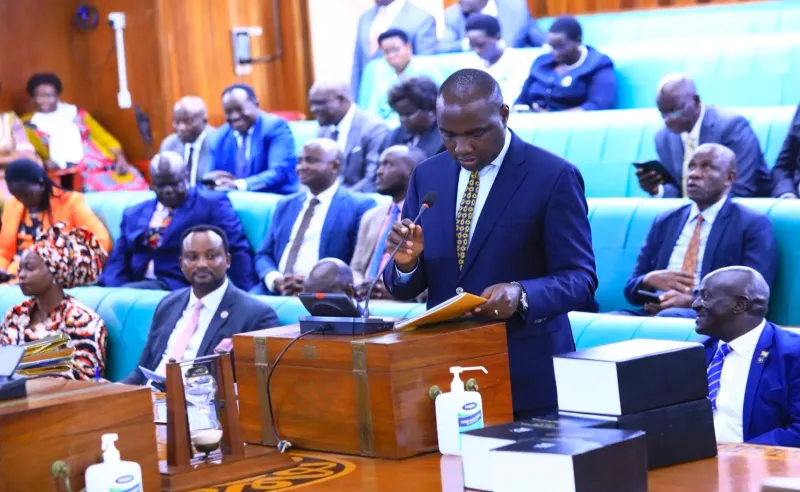

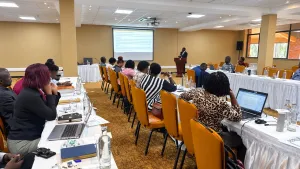
Parliament has approved supplementary funding of over Shs8 trillion for the 2025/2026 financial year, directing the additional funds toward major national priorities such as road construction, health services, agricultural initiatives and other development programmes.
While presenting the request during the plenary chaired by Speaker Anita Among on Tuesday, 02 December 2025, the State Minister for Finance, Planning and Economic Development (General Duties), Hon. Henry Musasizi, explained that the allocations under Supplementary Schedules 1, 2 and 3 are outside the approved annual budget but still fall within the allowable three per cent limit.
According to Musasizi, “We have incurred expenditures that had been unforeseen and unavoidable at the time of budgeting. These fall within the three per cent requirement and we are requesting Parliament to consider these expenditures and approve them in order to regularize the process.”
In the Budget Committee report presented by its Chairperson, Hon. Patrick Opolot Isiagi, the House was informed that the supplementary financing will be sourced from non-tax revenue (Shs42.96 billion), local government revenue (Shs13.03 billion), domestic borrowing (Shs3.7 trillion) and external financing (Shs4.27 trillion).
Breakdown of the Supplementary Schedules
Supplementary Schedule I
About Shs1.65 trillion is earmarked to address critical shortfalls, including those resulting from the withdrawal of US support for key health programmes. The funds aim to avert drug shortages and other health emergencies.
The Ministry of Foreign Affairs is slated to receive Shs3 billion to host the 18th Ministerial mid-term review of the Non-Aligned Movement (NAM), while Shs6.92 billion will go toward recruitment costs for newly created grant-aided UgIFT seed secondary schools.
Supplementary Schedule II
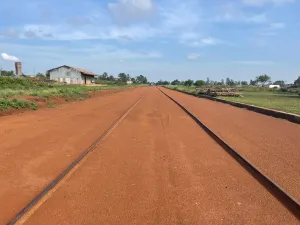
Shs1.69 trillion will be allocated to the Ministry of Works and Transport to resume progress on several suspended or slowed road projects. This includes 395 km across seven halted contracts, among them the Kampala–Jinja Highway (72 km), as well as 533 km across 11 projects operating at reduced pace and nine bridge works affected by financing gaps.
Supplementary Schedule III
A total of Shs4.75 trillion will fund several commitments, including Shs7.95 billion for the Commission of Inquiry investigating the Apaa land dispute, following a directive from the President.
The schedule also sets aside Shs422.26 billion for Uganda Airlines to acquire additional aircraft: two Boeing Dreamliner passenger planes, one Boeing freighter, and two mid-range Airbus aircraft, together with related bridge-leasing costs.
Other allocations include Shs37.5 billion for community access road construction in 81 district local governments under the national oil seeds programme, and Shs10 billion to support the national ambulance system, which is struggling due to fuel shortages and mechanical failures.
Minority Concerns Raised in Parliament
Despite the majority support, a minority report presented by Hon. Ibrahim Ssemujju (FDC, Kira Municipality) criticised both the magnitude and nature of the supplementary requests. He noted that repeated supplementary financing for long-standing obligations in sectors such as agriculture, works, energy, health and defence had become routine rather than exceptional.
“Parliament is being asked to approve more than Shs6 trillion in supplementary funding. If this continues, we will soon reach a point where the annual budget is treated as a ceremonial event while the real spending happens through supplementary schedules,” Ssemujju warned.
Ssemujju recommended that government present a comprehensive report on proposed Uganda Airlines aircraft purchases before any approval is granted, and that Parliament receive quarterly updates on the implementation of all supplementary expenditures.
“The Ministry is requesting more than Shs400 billion to purchase new aircraft for Uganda Airlines yet the country has not recovered from the Bombardier deal, where we purchased aircraft that were already being phased out. Before government buys any new aircraft, a thorough due diligence process must be presented,” he said.
Parliament of the Republic of Uganda


The Sunrise Editor
Leave a Comment
Your email address will not be published.