
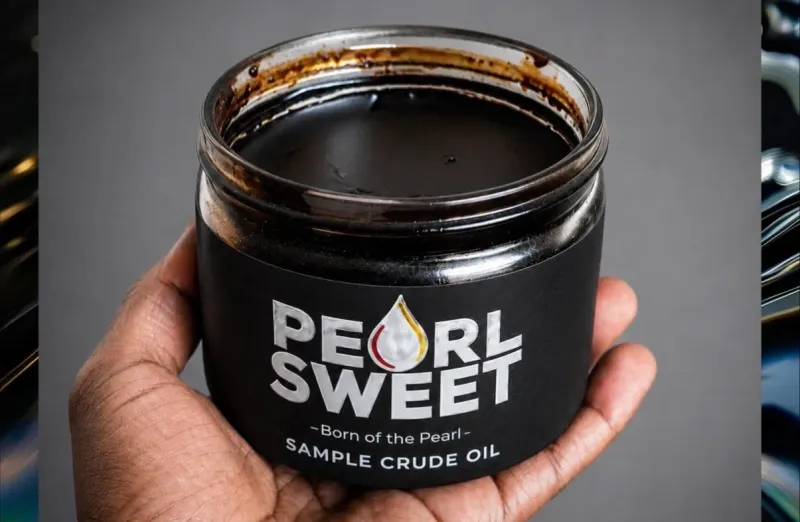




Uganda has officially named its crude oil blend “Pearl Sweet”, marking a major milestone in the country’s journey toward commercial oil production and international crude exports.
President Yoweri Kaguta Museveni announced the name during an oversight visit to the Kingfisher Development Area in Kikuube District, where he also presided over the crude oil naming ceremony.
The name Pearl Sweet combines Uganda’s national identity with a key characteristic of its crude. “Pearl” reflects Uganda’s long-standing description as the Pearl of Africa, while “Sweet” refers to the crude’s relatively low sulphur content.
Low-sulphur crude is generally considered more attractive to refiners because it can be processed more easily and economically into products such as petrol and diesel. In the international oil industry, crude with low sulphur content is commonly classified as sweet crude.
Uganda’s Pearl Sweet crude will come from the Kingfisher and Tilenga oil developments, which are expected to reach a combined peak production of about 230,000 barrels per day.
The crude will be transported through the East African Crude Oil Pipeline (EACOP) from the Lake Albert region in western Uganda to Tanzania’s Indian Ocean coast. According to information presented by EACOP, the pipeline will cover approximately 1,443 kilometres, including 296 kilometres in Uganda and 1,147 kilometres in Tanzania.
The crude will enter the pipeline at Pump Station One in Kabaale, Hoima District, before travelling to the Chongoleani Marine Terminal near Tanga, Tanzania. From there, the oil will be loaded onto tankers for export to international markets.
A distinctive feature of Uganda’s crude is its waxy nature and relatively high pour point, estimated at around 40 degrees Celsius. This means the crude requires heating to remain sufficiently fluid while being transported.
EACOP has therefore been designed with an insulated and buried pipeline system equipped with electrical heating technology to facilitate the movement of the crude from the Lake Albert oil fields to the Tanzanian coast.
The pipeline system includes six pumping stations, two pressure reduction stations and a marine export terminal. EACOP is reported to be approximately 92 percent complete, with construction and commissioning activities moving into the final stages.
President Museveni said Uganda’s oil resources should be used as a foundation for broader economic transformation rather than simply increasing consumption.
He stressed that revenues generated from petroleum should be channelled into long-term investments such as electricity, roads, railways, universities, industries and skills development.
The President also highlighted Uganda’s strategy of increasing value addition within the country through petroleum refining, petrochemical industries and the utilisation of associated gas for electricity generation.
Uganda has been pursuing the development of an oil refinery as part of its strategy to reduce dependence on imported petroleum products. Museveni said the country’s petroleum import bill is about US$2 billion a year, making domestic refining an important part of the government’s wider economic strategy.
Associated natural gas from the oil developments is also expected to contribute to Uganda’s energy supply. Gas from the Kingfisher development is projected to support approximately 80 megawatts of electricity generation, while other petroleum products are expected to serve domestic uses, including cooking.
The President called for continued cooperation between the government, oil companies, technical teams and Ugandan professionals as the country moves closer to first commercial production.
Uganda has also invested in developing local petroleum expertise, including training Ugandans in specialised fields needed to manage the country’s oil and gas sector.
Museveni further called for continued exploration, arguing that Uganda should not regard the expected first commercial oil production as the end of its petroleum journey.
The government’s broader objective is to use oil revenues to build productive capacity that can continue generating economic opportunities after the country’s petroleum resources eventually decline.
The official adoption of the name Pearl Sweet therefore gives Uganda’s crude a distinct identity as it prepares to enter international markets, while also highlighting the government’s stated ambition to use petroleum as a catalyst for industrialisation, energy development and long-term economic transformation.
As EACOP advances toward completion and the Kingfisher and Tilenga developments move closer to production, Uganda is entering a new phase in its oil journey, from petroleum discovery and development to commercial production, transportation and export.





Linda Munyana
Leave a Comment
Your email address will not be published.