
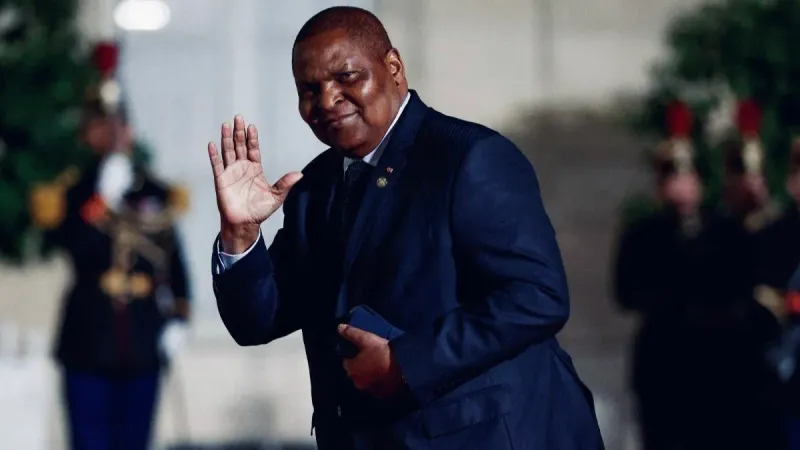


Central African Republic President Faustin-Archange Touadéra has secured a third term in office after provisional results from last month’s presidential election showed him winning a clear majority of the vote.
The election was held on 28 December following a 2023 constitutional amendment that removed presidential term limits, a change that allowed Touadéra to run again and sparked criticism from opposition groups. His victory was widely expected after the country’s main opposition coalition chose to boycott the poll, arguing that the political environment did not allow for a fair and transparent contest.
Preliminary figures released by the national election authority indicate that Touadéra received about 76 percent of the vote, while his closest challengers, both former prime ministers, recorded significantly lower support. Opposition figures have disputed the provisional results and have alleged irregularities during the voting process. Any formal complaints are due to be reviewed by the Constitutional Court, which is expected to confirm the final outcome later this month.
More than two million voters were registered for the election, which observers described as largely peaceful despite logistical challenges. Some polling stations reportedly experienced delays due to the late arrival of voting materials, and issues were also noted with voter registration lists in certain areas.
Touadéra campaigned on his record of improving security in the Central African Republic, a country that has faced chronic instability since armed groups overthrew the government in 2013. In recent years, his administration has relied on foreign military support, including assistance from Russian-linked forces and Rwandan troops, to counter rebel activity and secure key parts of the country.
Political analysts say the president’s re-election could further strengthen Russia’s influence in the Central African Republic, particularly in exchange for access to natural resources such as gold and diamonds. The country was among the first in Africa where Russian mercenary groups became active, playing a prominent role in protecting the government.
Despite relative improvements in security, the Central African Republic remains one of the poorest and most fragile states in the world. The United Nations estimates that around half of the population depends on humanitarian assistance, reflecting ongoing challenges related to poverty, displacement, and limited access to basic services.
A peace agreement signed in 2019 between the government and several armed groups helped ease violence, although some factions later withdrew, leaving parts of the country vulnerable to renewed instability. As Touadéra prepares for another term in office, expectations remain high over whether his government can deliver lasting peace, economic recovery, and improved governance.


The Sunrise Editor
Leave a Comment
Your email address will not be published.