




World News
US-Iran Economic War escalates: Trump declares 'Economic D-Day' as Tehran threatens Middle East oil routes
The United States and Iran have entered a dangerous new phase of conflict as Washington pivots from military operations to a hyper-aggressive campaign of financial warfare. U.S.
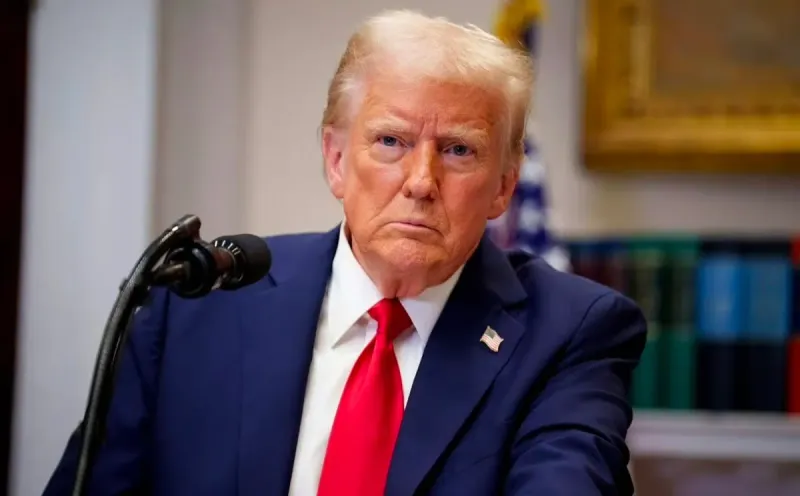
President Donald Trump has officially declared an "Economic D-Day," promising a coordinated global blockade to completely isolate the Iranian economy.
This major policy shift aims to tighten loopholes that Tehran has historically used to survive, explicitly targeting shadow oil fleets, global currency swap lines, and international ship registries. Sending a strict ultimatum to the rest of the world, the White House made it clear that any nation providing a financial lifeline to Iran, including its largest oil buyer, China, will face severe American economic punishments.
In response, Tehran has flatly dismissed the measures while preparing a fierce defense that threatens to destabilize global energy security. Mohsen Rezaei, the head of Iran's Supreme National Security Council, issued a severe warning via a state broadcaster, cautioning Middle Eastern neighbors against cooperating with Washington's blockade. Rezaei declared that if regional states assist the U.S. economic war, Iran will view them as enemies and strike their interests.
Most alarmingly, Iranian officials threatened that if their own economic lifelines are entirely cut, they will retaliate by halting all shipping traffic through the crucial Strait of Hormuz, vowing not to allow a single drop of oil to leave the Persian Gulf.
As part of this retaliation, the Iranian parliament’s National Security and Foreign Policy Commission has already advanced a draft law requiring any commercial ships passing through the strait to pay heavy service fees directly to Tehran. This legislative push follows highly controversial statements by President Trump, who recently claimed to view the strategic waterway as "American territory." The threat of blocking this vital maritime artery has sent shockwaves through financial markets, though global oil benchmarks saw a slight, cautious pullback on Monday morning.
West Texas Intermediate futures dropped to $85.93 per barrel, while Brent crude fell to $93.22, even as domestic U.S. gas prices remain high and Federal Reserve officials warn that inflation goals are slipping out of reach. Behind the scenes, signs of political friction are emerging within Iran as the pressure mounts.
While military hardliners push for a defiant stance, Iranian President Masoud Pezeshkian acknowledged the heavy toll on civilians, stating publicly that the country cannot continue with war forever. With regional stability hanging in the balance, diplomatic channels are scrambling to prevent a wider conflict. Omani Foreign Minister Sayyid Badr Albusaidi is scheduled to fly to Tehran on Tuesday for emergency talks, aiming to defuse the transit crisis before the economic war triggers a catastrophic disruption to global trade.



Sunrise reporter
Leave a Comment
Your email address will not be published.