
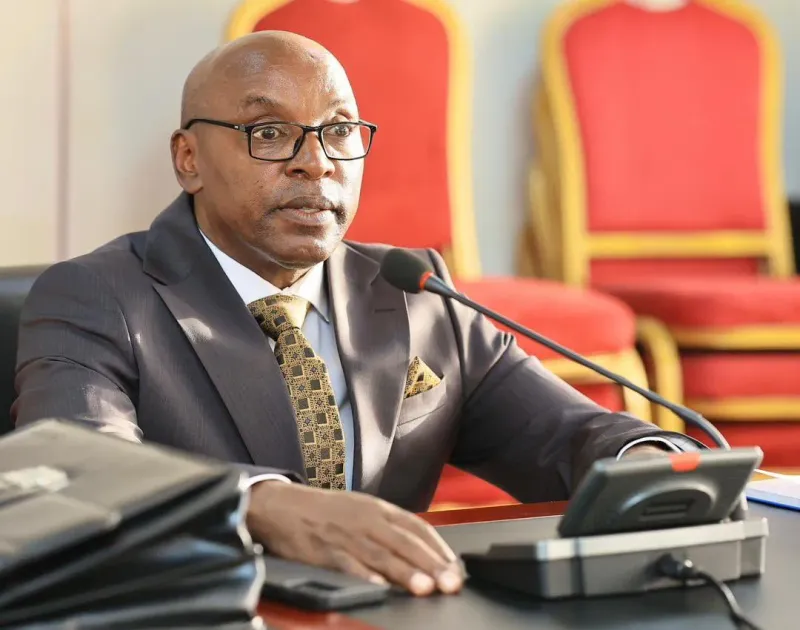


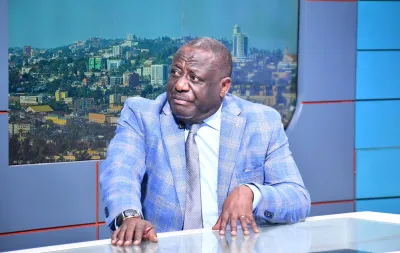
Justice Dr. Flavian Zeija has appeared before Parliament’s Appointments Committee for vetting as Uganda’s next Chief Justice. The committee is chaired by Speaker of Parliament Anita Among. His nomination was made by President Yoweri Kaguta Museveni following the retirement of Chief Justice Alfonse Owiny-Dollo, who stepped down after attaining the constitutional retirement age of 70.
Nomination Comes at a Critical Time for the Judiciary
Justice Zeija’s nomination arrives as Uganda’s judiciary continues reforms aimed at reducing case backlogs, improving court efficiency, and reinforcing the rule of law. These priorities have featured prominently throughout Zeija’s judicial career and are expected to be central to his leadership agenda if approved.
Extensive Judicial and Administrative Experience
Justice Zeija brings nearly a decade of experience on the bench and a longer career in legal practice and academia. He joined the judiciary in 2016 as a High Court judge and was first deployed as the Resident Judge in Mbarara. His performance in judicial administration later saw him appointed Principal Judge of the High Court in December 2019, a role in which he supervised the High Court and magistrates’ courts nationwide.
In February 2025, he was elevated to Deputy Chief Justice of the Supreme Court. In that capacity, he also headed the Court of Appeal and introduced procedural reforms, including ending the practice of indefinite “judgments on notice,” a move widely seen as reducing uncertainty for litigants and lawyers.
Academic and Professional Background
Beyond the bench, Justice Zeija is a seasoned lawyer and academic. He holds a Bachelor of Laws and a Master of Laws from Makerere University, a Doctor of Philosophy (PhD) in Law from the University of Dar es Salaam, and a Master of Business Administration (MBA) from Uganda Martyrs University.
Before joining the judiciary, he practiced law as the managing partner at Zeija, Mukasa & Company Advocates. He also lectured at Makerere University and Uganda Christian University and previously served as legal counsel for FINCA Uganda.
Constitutional Process for Appointing a Chief Justice
The appointment of a Chief Justice is governed by the Constitution of Uganda. Article 142(1) of the 1995 Constitution (as amended) provides that the Chief Justice is appointed by the President on the advice of the Judicial Service Commission, subject to approval by Parliament. Article 143 further sets out the qualifications, requiring a nominee to have served as a justice of the Supreme Court or to have practiced as an advocate for at least 20 years before a court of unlimited jurisdiction.
Parliamentary Vetting and Oversight
During the vetting process, the Appointments Committee assesses the nominee’s integrity, competence, and overall suitability for the office. After concluding its review, the committee prepares a report that is presented to the full House for debate. Parliament then votes to approve or reject the nomination before the appointment can be finalized.
Parliamentary oversight is intended to safeguard judicial independence while ensuring accountability to the public. Observers note that the outcome of Justice Zeija’s vetting will shape the direction of Uganda’s judiciary at a time of heightened public interest in justice sector reforms.
Updates on the committee’s proceedings and Parliament’s final decision are expected soon.






Sunrise reporter
Leave a Comment
Your email address will not be published.