
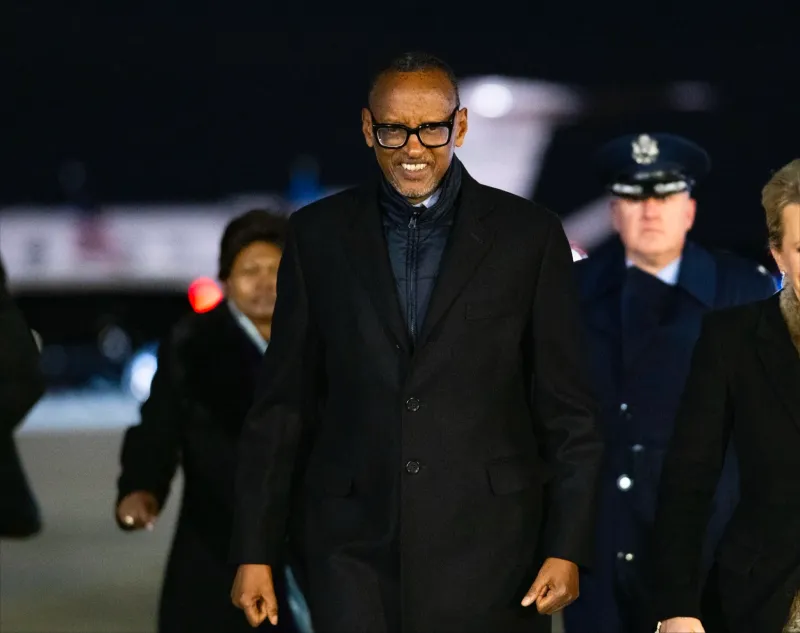
US President Donald Trump will host Rwandan President Paul Kagame and Democratic Republic of Congo (DR Congo) President Félix Tshisekedi in Washington on Thursday for the signing of the Washington Accords for Peace and Prosperity, an agreement the White House has described as “historic.” The ceremony follows an initial phase signed by the countries’ foreign ministers in June and is intended to reduce tensions between Rwanda and DR Congo while establishing a framework for expanded US economic engagement in the region.
The signing comes despite continued clashes in eastern DR Congo, where the M23 rebel movement has seized major cities and consolidated authority over large parts of North and South Kivu. Humanitarian groups and local leaders report ongoing displacement and violence. “There are bullets everywhere. People are not safe,” said civil society leader David Cikuru. Conflict-monitoring organisations have recorded hundreds of deaths in recent weeks.
Central to the dispute is Rwanda’s alleged military support for M23, a claim backed by UN expert reporting but rejected by Kigali. DR Congo insists that peace requires the withdrawal of Rwandan forces from its territory, while Rwanda says the threat posed by the FDLR militia must be addressed first. Both provisions appear in the agreement being endorsed in Washington, though analysts note that similar commitments in previous peace efforts have faltered.
M23 is not attending the ceremony. Instead, the group is engaged in separate Qatar-led discussions with the Congolese government, which have so far produced no agreement on disarmament or the return of occupied territory. Researchers warn that without progress on these issues, large-scale fighting is likely to continue.
The Trump administration has promoted the accord as part of its wider diplomatic efforts and as an opportunity to create stability that could enable American investment in one of the world’s most mineral-rich regions. The US State Department has estimated that DR Congo holds vast reserves of cobalt, lithium, copper and other critical minerals needed for modern technology and energy infrastructure. While acknowledging economic interests, Congolese officials emphasize that national resources remain under Congolese control. “This peace agreement is not giving up the mineral resources of the D.R.C. to the U.S.,” said Tina Salama, spokeswoman for the Congolese presidency.
Skepticism remains high within DR Congo, where some political leaders argue that the signing ceremony does not reflect the realities of continued warfare. One opposition figure accused the government of “mocking Congolese corpses” by proceeding with the deal while communities remain under attack.
Despite the doubts, US, African, and Qatari mediators hope the agreement will increase pressure on both Rwanda and DR Congo to follow through on commitments to ease tensions. For now, however, analysts note that “the implementation of peace” remains the most difficult stage, and one that has not yet begun on the ground.

The Sunrise Editor
Leave a Comment
Your email address will not be published.