
As schools across Uganda prepare to open for the new academic year, the Uganda National Teachers’ Union (UNATU) has indicated a strategic shift amid ongoing frustration over delayed salary enhancements for arts teachers. In previous years, school openings have been accompanied by familiar challenges, including strike threats, delayed teacher reporting, and tense negotiations focused on pay and working conditions.
The issue intensified following the 2022 salary reform, which awarded science teachers a 300 per cent increase while arts and humanities teachers did not receive comparable adjustments. This has created a long-standing pay gap that has generated widespread concern and affected supervision in schools. In late January 2026, Parliament approved the Budget Framework Paper for the 2026/27 financial year. The paper did not include provisions for salary increases for arts teachers, contrary to earlier government assurances made during last year’s industrial actions.
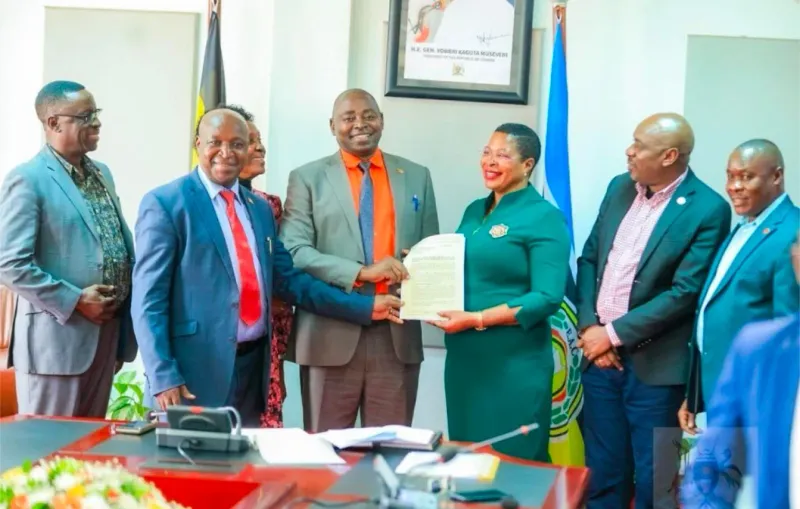
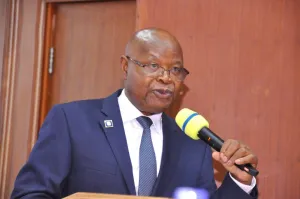
Speaking to reporters, UNATU Secretary General Filbert Baguma confirmed the union’s preference for dialogue at this stage. “It is unfortunate that the government has not yet effected the promised enhancement,” Baguma said. “But we believe there is still room for meaningful dialogue.” He recalled that during last year’s industrial action, the government pledged phased salary increases for arts teachers, a matter that was escalated through the Speaker of Parliament, Annet Anita Among, with assurances that it would be fast-tracked.
Baguma added, “Last year we took the matter to the Speaker (of parliament), and we were promised results. However, because it came at the height of a political season, the speaker and the designated committees may not have prioritised or expedited the changes we expected.” UNATU plans to return to the Speaker’s office to advocate for inclusion of the promised salary enhancements in future budget plans.
Francis Ssematimba, UNATU branch chairperson in Masaka city, welcomed the union’s new approach. “Tools down has not yielded results, and the members want results. This repeated confrontational style has actually taken the union down in the eyes of many. Some members have even been abandoning the union because of it,” he said. Ssematimba noted that members repeatedly used the same strategies while expecting different outcomes, and praised the shift toward dialogue and strategic engagement. “From the start, some members urged the union to tone down rhetoric, change language, and step away from constant confrontation and an ‘I want posture’. Dialogue and strategic engagement offer a stronger path,” he added.
Ssematimba’s comments reflect a sentiment among some teachers that repeated strike threats have not achieved lasting salary improvements and may have affected the union’s credibility with both government negotiators and members. Meanwhile, Minister of Public Service Wilson Muruli Mukasa expressed concern that the anticipated salary provisions were missing from the budget framework and directed the Ministry of Finance to address the issue in the upcoming budget circular.
The education sector faces additional challenges amid funding constraints. The Ministry of Education and Sports indicates that the 2026/27 budget for the Education and Sports Sub-Programme is approximately 5.35 trillion shillings, a reduction of around 209 billion shillings from the current year’s allocation of 5.56 trillion shillings. State Minister for Education and Sports Peter Ogwang recently told Parliament’s Education Committee that these cuts may affect key commitments, including teacher salary enhancements, preparations for international events such as the Africa Cup of Nations (AFCON), and the rollout of free and compulsory Universal Primary Education.
The ministry estimates that approximately 1.9 trillion shillings is required to fully meet its targets under the National Development Plan IV.

The Sunrise Editor
Leave a Comment
Your email address will not be published.