

Tyler Robinson, 22, accused of murdering conservative activist Charlie Kirk at Utah Valley University, made his first in-person court appearance on Thursday as a Utah judge considers how much media access should be allowed in this high-profile case. Robinson’s attorneys and the Utah County Sheriff’s Office requested that cameras be banned from the courtroom, citing concerns that media coverage could interfere with a fair trial.
A coalition of national and local news organizations, along with Kirk’s widow Erika Kirk, are advocating for transparency. Erika Kirk told Fox News, “We deserve to have cameras in there,” emphasizing the importance of public access to court proceedings. Judge Tony Graf is reviewing previous closed hearings, including a 14 October audio recording and a 24 October transcript. He explained, “I need to hear what should or should not be sealed or protected and it would not benefit to have everyone listen to what should be sealed.”
Robinson has been charged with aggravated murder in connection with the September 10 shooting of Kirk during an open-air event at Utah Valley University in Orem, Utah. Prosecutors have announced their intention to seek the death penalty. Robinson has not yet entered a plea. Authorities said he turned himself in after a widely publicized manhunt, confessing the crime to his father, who recognized him from law enforcement-released images and persuaded him to surrender.
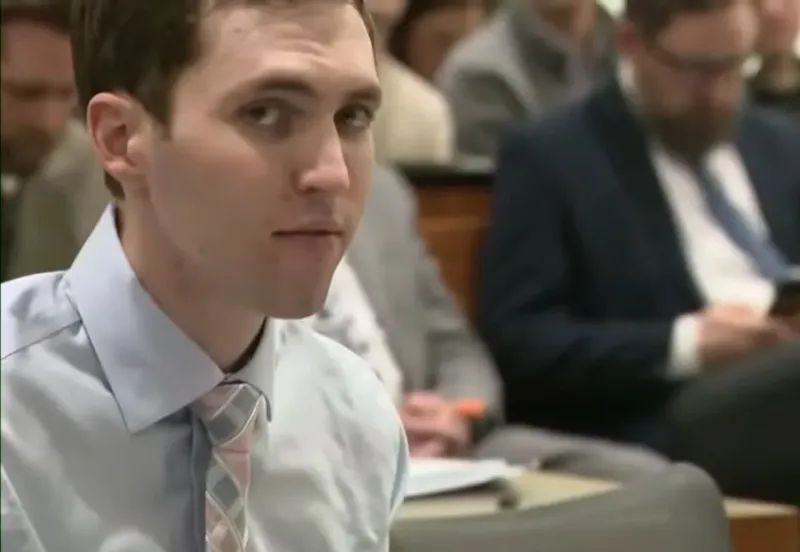
During Thursday’s hearing in Provo, Robinson appeared in civilian clothing, wearing a dress shirt, tie, and slacks, with restraints on his wrists and ankles. He smiled at family members seated in the courtroom, including his mother, father, and brother. The judge has prohibited media from photographing or filming Robinson in restraints to protect his presumption of innocence.
Several students who witnessed Kirk’s shooting attended the hearing. Utah Valley University student Zack Reese said he came seeking answers despite his initial skepticism about Robinson’s arrest. Brigham Young University student William Brown, who was near Kirk during the shooting, described seeing Robinson in court as overwhelming, adding, “I witnessed a huge event, and my brain is still trying to make sense of it. I feel like being here helps it feel more real than surreal.”
Robinson’s legal team has raised concerns about pretrial publicity, which reached as far as the White House. Following the arrest, former President Donald Trump commented, “With a high degree of certainty, we have him,” and “I hope he gets the death penalty.” Attorneys also highlighted the spread of digitally altered images of Robinson in court, which misrepresented his appearance and behavior.
Media attorney Michael Judd, representing the coalition of news organizations, urged the court to allow journalists to weigh in on future requests for closed hearings or restrictions. He stated that open courts “safeguard the integrity of the fact-finding process” while maintaining public confidence in judicial proceedings. Historically, criminal trials in the United States have been open to the public, demonstrating that fairness can coexist with media coverage.
As the legal debate over media access continues, Erika Kirk and news organizations remain committed to transparency, emphasizing the public’s right to witness proceedings in one of Utah’s most widely followed criminal cases.


The Sunrise Editor
Leave a Comment
Your email address will not be published.