

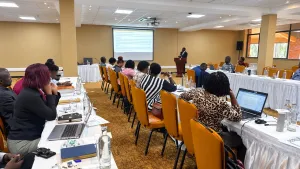

Uganda’s newly appointed Cabinet Ministers have commenced a week-long induction retreat at the National Leadership Institute (NALI) in Kyankwanzi aimed at strengthening their understanding of government systems, Cabinet procedures, policy implementation, and leadership responsibilities.
The retreat brings together newly appointed and returning ministers for orientation on governance, strategic planning, budgeting, institutional coordination, and effective service delivery.
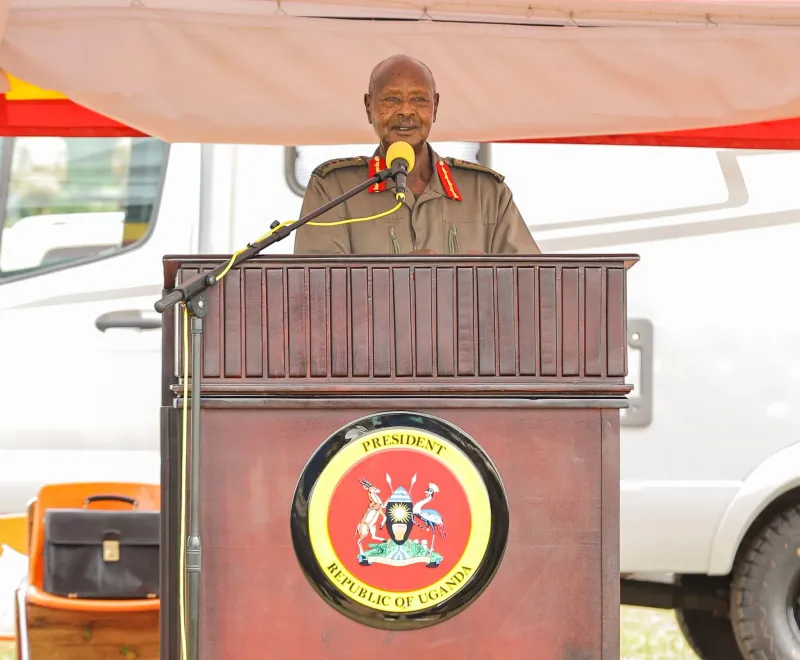
President Yoweri Kaguta Museveni, addressing the Ministers’ Induction Retreat, emphasized that leadership is not merely about occupying office but about understanding its true purpose and responsibility to the people. He cautioned that public resources belong to citizens and must be used strictly for national development rather than personal enrichment. The President further noted that without structural transformation, economies remain vulnerable and unable to generate sustainable wealth, adding that human beings must use their ability to reason, plan, and innovate to drive development and progress.
Also addressing the ministers, the Head of Public Service and Secretary to Cabinet, Lucy Nakyobe Mbonye, said the induction programme is designed to prepare leaders for the demands of modern governance and ensure government programmes translate into measurable benefits for citizens.
“The question before us is no longer whether Government has programmes; the question is whether those programmes are producing measurable impact for our people,” Nakyobe said.
She urged ministers to embrace discipline, integrity, accountability, and results-oriented leadership, stressing that citizens expect tangible improvements in healthcare, education, infrastructure, employment opportunities, and household incomes.
Nakyobe further cautioned against complacency, corruption, inefficiency, and abuse of office, noting that public resources must deliver value and improve livelihoods.
“It cannot be business as usual. Leaders must move beyond their offices, go to the field, monitor government programmes and ensure that services reach the intended beneficiaries,” she said.
The Head of Public Service also emphasized collective responsibility within Cabinet and called for stronger coordination across government institutions to achieve national development goals.
Prime Minister Robinah Nabbanja echoed similar sentiments, reaffirming government’s commitment to disciplined leadership, accountability, and accelerated service delivery.
Speaking on behalf of Cabinet, Nabbanja said the retreat seeks to strengthen coordination between political and technical leaders while reinforcing adherence to Cabinet procedures.
She noted that Uganda’s development agenda remains anchored in the 2026–2031 NRM Manifesto, the National Development Plan, and the Ten-Fold Growth Strategy.
The Prime Minister highlighted priority areas including agro-industrialisation, industrial development, science and innovation, and efforts aimed at integrating more households into the money economy.
“There is no room for corruption, complacency or delayed implementation of Government policies and Presidential directives,” Nabbanja said.
She also announced a shift toward real-time monitoring of government programmes and projects to enhance accountability, improve performance, and ensure value for money.
According to Nabbanja, citizens expect more than policy commitments, calling for visible improvements in education, healthcare, infrastructure, electricity access, employment, and household incomes.
Vice President Jessica Alupo has also addressed the ongoing Ministers’ Induction Retreat at the National Leadership Institute (NALI), Kyankwanzi, reaffirming Government’s commitment to disciplined leadership, accountability, and zero tolerance to corruption. She emphasized that the induction programme is critical in equipping Ministers and Permanent Secretaries with the knowledge and skills required for effective service delivery, noting that continuous learning is essential in public leadership.
The Vice President further highlighted Government’s commitment to the National Development Plan and the 2026–2031 development framework aimed at accelerating Uganda’s transition to upper middle-income status. She called for unity and collective responsibility within Cabinet to ensure effective implementation of national priorities.
The induction programme continues with sessions on policy formulation, strategic planning, budgeting, institutional governance, and field exposure visits to key national investment projects.
The retreat is expected to continue throughout the week.



Sunrise reporter
Leave a Comment
Your email address will not be published.