
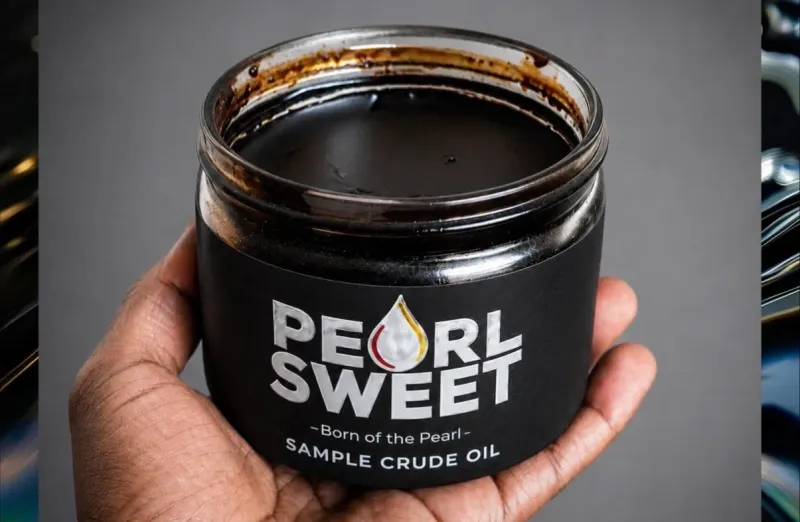





The Uganda National Oil Company (UNOC) has appointed global energy and commodities trader Vitol to market Uganda’s newly named Pearl Sweet crude oil as the country prepares to enter the international crude oil market.
UNOC said on Monday that Pearl Sweet is expected to become available for export from early 2027, marking a major step in Uganda’s transition from oil development to commercial production and international crude sales.
The appointment gives Vitol responsibility for marketing the crude allocated to the Government of Uganda and UNOC. The company is expected to use its international trading, marketing and logistics network to connect Pearl Sweet with potential buyers and refiners.
Pearl Sweet was officially named by President Yoweri Kaguta Museveni on September 2, 2026, giving Uganda’s crude a commercial identity ahead of production and international marketing. Vitol said the crude is a medium-to-heavy sweet grade with a high conversion-yield profile.
The crude will be produced from the Tilenga and Kingfisher development areas in Uganda’s Albertine region. Together, the two projects are expected to reach a combined production capacity of up to 230,000 barrels per day.
Kingfisher, operated by CNOOC Uganda, is designed for production of about 40,000 barrels per day, while the larger Tilenga project, operated by TotalEnergies, is designed for approximately 190,000 barrels per day.
The 230,000-barrel-per-day figure is a projected combined production level at the two developments and should not be interpreted as the volume Uganda will necessarily export from the beginning of 2027.
Uganda’s crude is planned to reach international markets through the East African Crude Oil Pipeline (EACOP).
The 1,443-kilometre pipeline will transport crude from Kabaale in Hoima to the Chongoleani Marine Terminal near Tanga in Tanzania, where the oil will be loaded for international markets. EACOP comprises approximately 296 kilometres in Uganda and 1,147 kilometres in Tanzania.
EACOP said recently that the project was approximately 92% complete, with construction and commissioning activities continuing as it prepares to receive Uganda’s first commercial crude.
The pipeline is designed specifically for Uganda’s crude, which has waxy characteristics and therefore requires heating to keep it flowing through the system.
Vitol’s appointment to market Pearl Sweet adds another layer to its existing relationship with UNOC.
According to UNOC, Vitol has already been involved in Uganda’s petroleum-products supply programme. The two companies have also signed a US$2 billion facility to support energy infrastructure development.
The announcement follows a August 6, 2026 Memorandum of Understanding involving UNOC, Tanzania Petroleum Development Corporation (TPDC) and Vitol to develop a regional energy hub at the Port of Tanga.
The proposed hub is intended to strengthen the port’s role as an energy and logistics centre serving markets in Asia and the Middle East while providing an additional corridor for Uganda and other landlocked countries.
Vitol’s Kieran Gallagher, Head of Vitol Asia, said Pearl Sweet is suited to a number of Asian refineries and that the company expects interest from potential buyers.
The marketing agreement means Uganda is now preparing not only the physical infrastructure needed to produce and transport crude, but also the commercial arrangements required to sell it internationally.
For Uganda, Vitol’s role could give Pearl Sweet access to an established global trading and logistics network as the country prepares to sell its crude to international refiners.
The development also places greater focus on the final stages of Uganda’s oil infrastructure, particularly production facilities, EACOP and the export terminal at Tanga.
The East African Crude Oil Pipeline itself has a designed transport capacity of 246,000 barrels per day, according to EACOP, which is above the projected peak combined production of 230,000 barrels per day from Tilenga and Kingfisher.
Uganda discovered commercially significant oil resources in the Albertine region more than a decade ago, but production has been delayed by the development of oil fields and associated export infrastructure.
The latest announcement indicates that the country is entering a more commercially focused phase, with a crude grade now named, a global marketer appointed and the export infrastructure approaching completion.
However, the early 2027 export timeline remains a forward-looking target. Actual exports will depend on completion, commissioning and readiness of the production and transportation systems.
With Vitol now appointed to market Pearl Sweet, Uganda is positioning itself for its next major milestone: moving its crude from the Albertine region through EACOP to the Tanzanian coast and into the international oil market.







Marlene Luwedde
Leave a Comment
Your email address will not be published.